XR in the classroom
A crossover study testing whether 3D XR lectures help pre-med students learn pathology better than 2D lectures.
The question
Most XR education research focuses on anatomy and requires a headset for every student, which is costly for large classes. Pathology asks students to connect microscopic and whole-organ changes, a spatially demanding task that has received little study. We tested OXR, a web-based tool where only the instructor wears a headset, to see whether 3D lectures improve learning.
The lectures
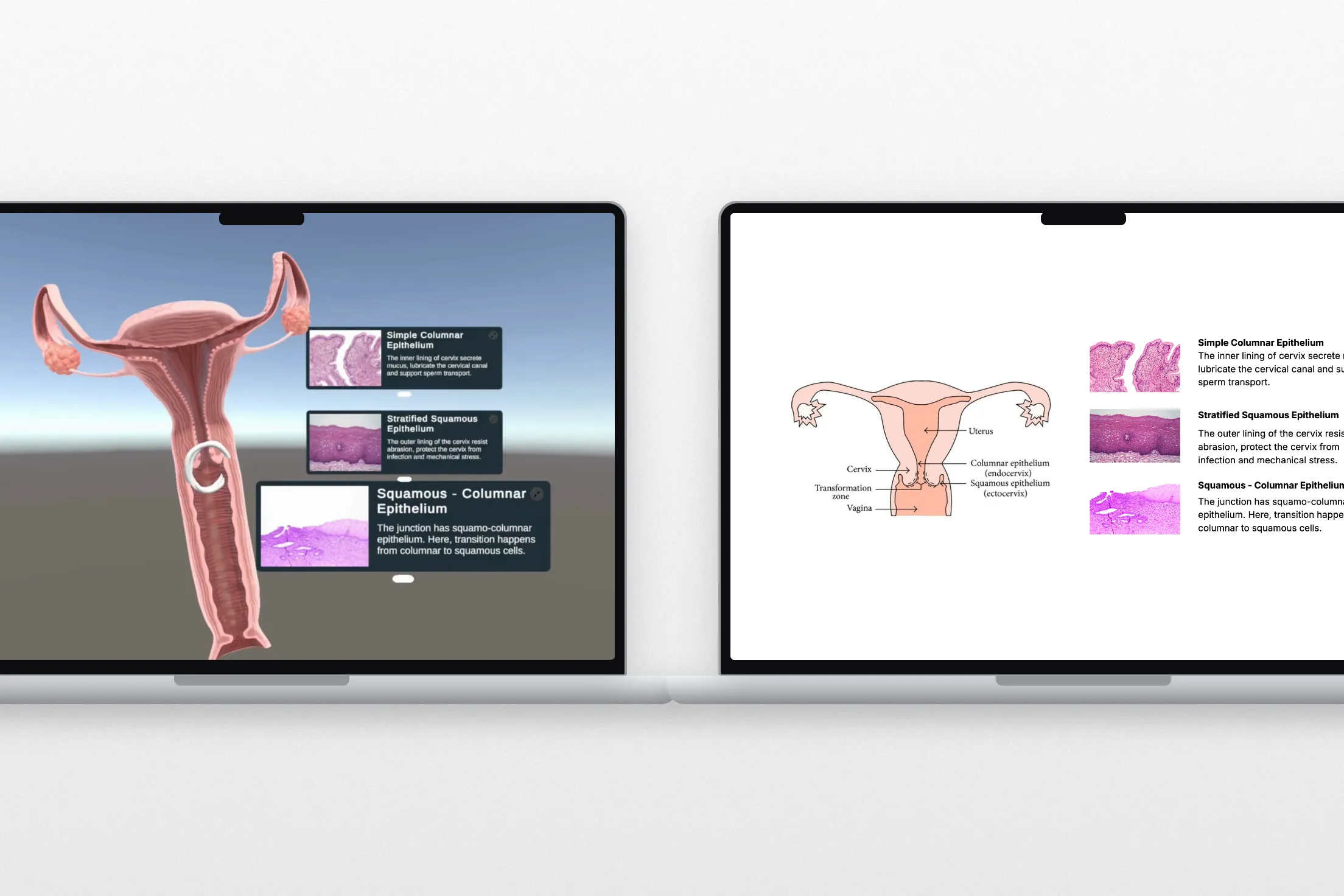
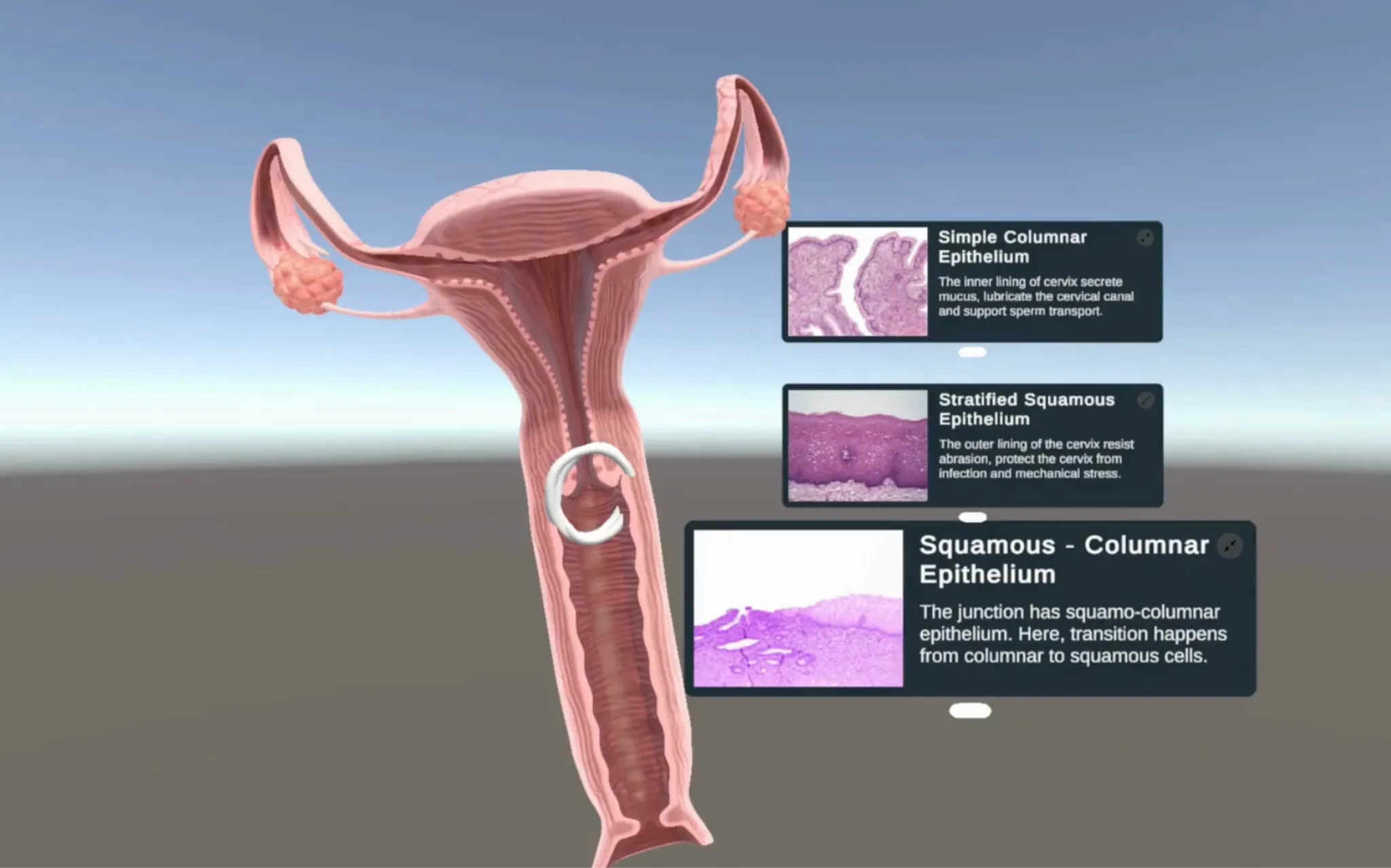
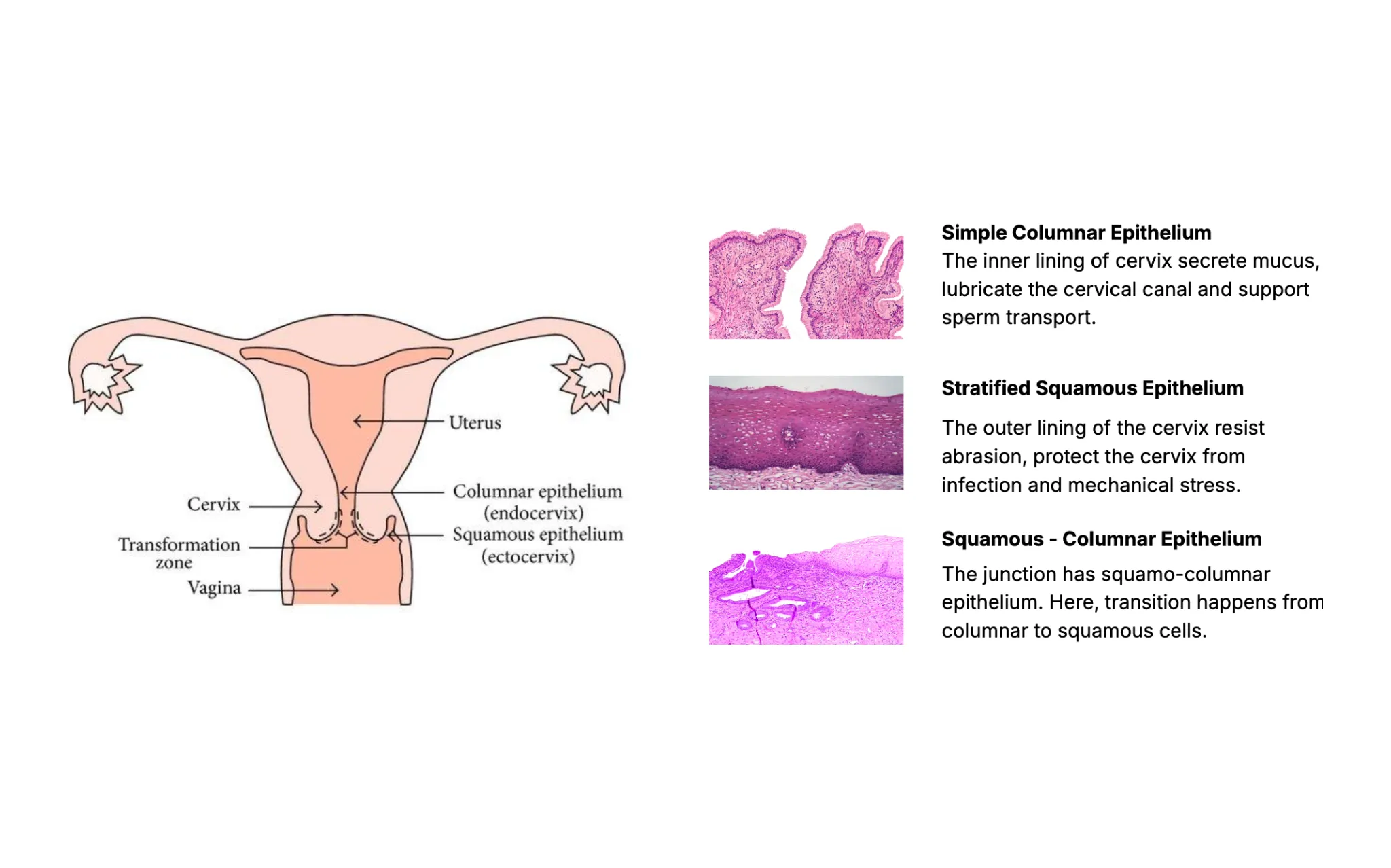
An instructor wearing a headset presented 3D models and histology cards in OXR, recorded as video. The 2D version used the same script, narration, and timing, so the only difference was dimensionality.
Study design
Undergraduate health sciences students with minimal prior knowledge (pre-test mean 2.2 of 10) learned about disease progression at two epithelial transition zones: Barrett's esophagus and HPV-driven cervical cancer.
Students preferred OXR
On the end-of-study survey, four of seven items significantly favored OXR. Spatial relationships had by far the largest effect (d = 2.30).
Learning outcomes
Both formats produced strong learning: +4.04 points from pre-test to retention (p < .001). Differences between formats were not statistically significant, though the study was underpowered to detect them.
Why it matters
Liking a format and learning more from it are not the same. Possible explanations include the novelty and extra effort of orienting to a 3D interface, and multiple-choice questions that may miss spatial understanding. For educators and for the OXR team, the evidence supports claims about engagement and spatial clarity, not better test scores. The next step is assessments that measure spatial reasoning directly.
Limitations
The sample fell short of our a priori power target, topic order was fixed, and assessment relied on multiple-choice questions. Three authors, including me, are affiliated with Mixel Studio, which develops OXR; this is disclosed in the manuscript. The paper is under peer review at BMC Medical Education, with a preprint available.